
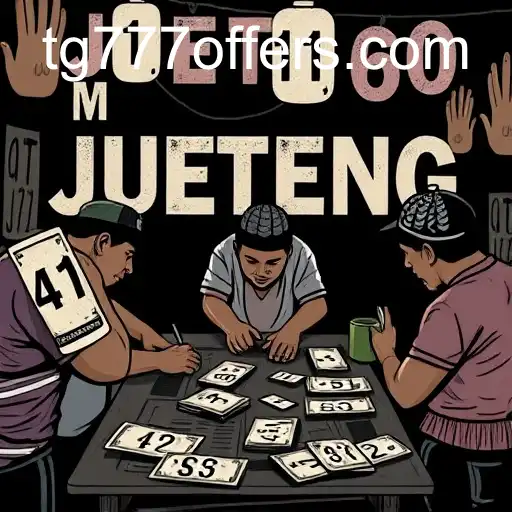
TG777 | Jueteng: A Persistent Challenge in the Philippines
TG777’s Explore the enigmatic world of Jueteng, its history, socio-economic impact, and the controversial connection to the keyword 'TG777.'
Understanding Jueteng: A Closer Look
Jueteng, a pervasive and controversial form of illegal gambling in the Philippines, has long been a subject of concern for authorities and society alike. Often juxtaposed between a source of livelihood and a criminal enterprise, Jueteng involves a complex nexus of participants that range from small-time bet collectors to high-ranking officials. In this piece, we delve into the enigmatic world of Jueteng, explore its socio-economic impact, and uncover the ties to the notorious keyword "TG777."
The Basics of Jueteng
At its core, Jueteng is a numbers game that involves betting on combinations of two numbers. Players choose two random numbers between 1 and 37. The winning combination is then drawn, often twice a day, and participants await the results, hopeful of a payout. The simplicity of the game may make it seem innocuous, yet it stands as a major illegal operation due to its unregulated nature and the substantial earnings swept under the radar.
Historical Context and Cultural Significance
Jueteng's history in the Philippines can be traced back to the Spanish colonial period, flourishing over centuries despite attempts at eradication. It is deeply entrenched in the cultural fabric, particularly in the provinces, where it is both vilified for its role in undermining the rule of law and yet grudgingly accepted as part of everyday life. Community members both disdain and envy those who profit from it, creating a paradoxical relationship with the practice.
Key Players in the Jueteng Ecosystem
The Jueteng operation involves a multi-layered network of individuals. At the base of this hierarchy are local collectors known as "kubradors," who navigate neighborhoods to gather bets. These collectors report to coordinators or "cabo," who then oversee operations and ensure that bets reach the next echelon, the bankers. The bankers, who are often well-connected individuals, serve as the financiers and core manipulators of the draw results. The intertwining of players at various levels makes Jueteng a deeply rooted system that proves difficult to dismantle.
Socio-Economic Implications
For many, Jueteng represents a chance to secure a supplementary income or escape poverty’s grasp. With economic disparity a persistent issue, people turn to gambling in hopes of transforming their luck. This underscores Jueteng’s dual nature: while it offers financial relief, it simultaneously perpetuates economic instability. On a macro-economic scale, the revenues from Jueteng remain part of an informal economy, leading to lost tax revenues that could otherwise serve public welfare.
The Influence of Corruption and Politics
Jueteng’s resilience in the Philippines is largely attributed to its ties with corruption and politics. Local officials, law enforcement, and sometimes, national figures, have been implicated in protecting these illegal operations in exchange for financial incentives or voter support. This connivance often comes at the cost of law enforcement agencies turning a blind eye, making any significant attempt at abolition fraught with challenges.
Jueteng and TG777: The Connection Explained
In the context of Jueteng, "TG777" is frequently whispered among insiders, with many speculating on its role in the grander network of numbers games. Although largely veiled in secrecy, "TG777" is believed to denote an operational codename linked with higher-tier decision-makers or specific betting methods that grant advantageous returns. Tracking its true influence proves difficult, as the codename is surreptitiously used to evade detection from authorities and manipulate outcomes to benefit certain stakeholders.
Approaches to Eradication
The battle against Jueteng necessitates a multi-pronged approach. Administrations have proposed legal alternatives, such as the Small Town Lottery (STL), though success remains elusive. Criminalization alone has proved insufficient due to deep-rooted acceptance and complicated networks. Effective resolutions might include comprehensive societal reforms that address poverty, education, and inequality, effectively cutting off the demand for such underground economies from the grassroots level.
A Continuing Challenge
The issue of Jueteng persists as a stubborn challenge for Filipino society. While it acts as a vehicle of survival for many, the legal and moral ramifications cast a long shadow. As stakeholders persistently seek pathways toward legitimacy and lawfulness, the connection to secretive elements like "TG777" only emphasizes the complexity and depth of the challenge.
Voices from the Ground
Insights from community members reveal a world torn between necessity and legality. Many gamblers view Jueteng as a lottery of the streets, offering a semblance of hope. "What choice do we have?" ask the kubradors, who themselves face moral conflicts and economic pressures. Their perspectives underscore the essential question facing authorities: can an adaptable and inclusive framework be established to address and resolve the issues surrounding Jueteng?
Conclusion: What Lies Ahead
While the legal and societal wrestle with Jueteng and elusive entities like "TG777" rages on, it remains vital for laws, community engagement, and socio-economic reforms to evolve in unison. Only through the concerted efforts of government, non-profit organizations, and community activism can Jueteng transition from a vice society tolerates to a relic of the past. As the Philippines continues to grow and change, addressing the roots of this issue might one day turn the whims of fortune back to benefiting the common good.
